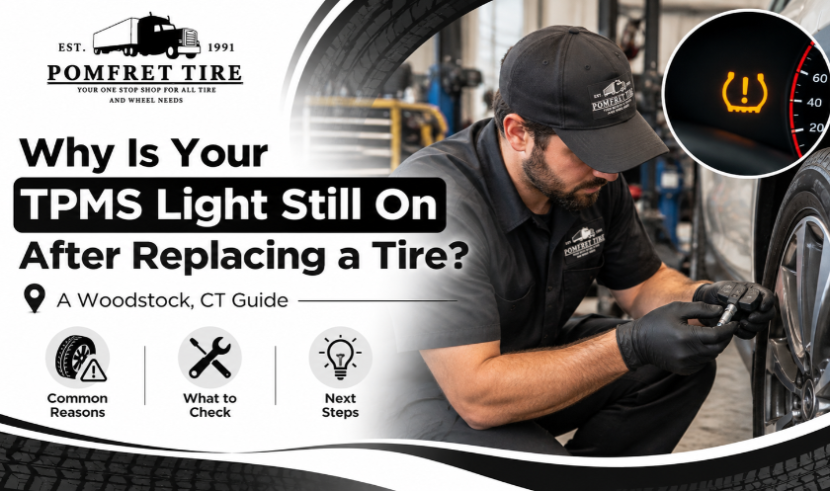

You recently replaced a worn or damaged tire, but the tire pressure monitoring system (TPMS) warning light is still glowing on your dashboard. This can be frustrating, especially when you expect the warning to disappear after getting a new tire. For drivers in Woodstock, CT, understanding why this happens can help prevent unnecessary repairs and ensure their vehicles remain safe on the road. A TPMS warning does not always mean the new tire is defective. The issue could involve incorrect tire pressure, a sensor that needs to be relearned, a weak sensor battery, or another system malfunction. Identifying the actual cause is the first step toward resolving the problem.
What Does the TPMS Warning Light Actually Mean?
The tire pressure monitoring system alerts drivers when one or more tires are significantly underinflated. Most modern vehicles use either direct TPMS sensors inside the wheels or indirect systems that estimate pressure differences through wheel-speed measurements. A steady warning light usually indicates that tire pressure needs attention, while a flashing light that later stays illuminated commonly signals a TPMS malfunction. However, warning patterns can vary by vehicle manufacturer. Checking tire pressures with a reliable gauge and consulting the owner’s manual can help drivers understand the warning before assuming a sensor has failed.
Why Might the TPMS Light Stay On After a Tire Replacement?
Replacing a tire does not automatically correct every condition that activates the TPMS warning. The new tire may have been inflated to the wrong pressure, another tire may still be underinflated, or the vehicle may require a TPMS reset or relearn procedure. In some cases, a sensor may have been damaged during tire removal or installation. The warning could also be unrelated to the recently replaced tire. A professional inspection can help determine whether the problem involves tire pressure, sensor communication, or the vehicle’s monitoring system.
Does Your TPMS Need to Be Reset After Installing a New Tire?
Some vehicles require a reset or relearn procedure after tire service, while others recognize sensor information automatically. The correct process depends on the vehicle’s make, model, year, and TPMS design. Certain systems require driving for a specified period, while others need a dashboard reset, scan tool, or sensor registration procedure. Simply pressing a reset button without checking tire pressure may temporarily hide an issue rather than resolve it. Drivers should follow manufacturer instructions and ensure all tires are inflated correctly before completing a reset.
Could the New Tire Have the Wrong Air Pressure?
Yes, incorrect inflation pressure is one of the simplest explanations for a warning that remains illuminated. Even a newly installed tire may not match the vehicle manufacturer’s recommended cold inflation pressure. Drivers should use the tire pressure information label, typically located on the driver’s door jamb, rather than the maximum pressure printed on the tire sidewall. Other tires should also be checked because the warning may come from a different wheel. Measuring pressure when the tires are cold provides a more reliable reading and helps prevent underinflation-related handling problems and uneven wear.
Can a TPMS Sensor Be Damaged During Tire Installation?
Direct TPMS sensors are commonly attached to the valve stem or mounted inside the wheel, placing them close to equipment used during tire replacement. Although technicians use procedures designed to protect these components, sensors can sometimes be damaged during mounting or dismounting. A cracked sensor housing, damaged valve stem, or loose component may interfere with accurate pressure monitoring. Sensors can also develop problems independently of tire service. If the warning began immediately after a tire replacement, a technician can inspect the affected wheel and check for sensor-related trouble codes.
Could an Old TPMS Sensor Battery Be the Problem?
Many direct TPMS sensors contain sealed batteries that gradually lose power over time. These batteries commonly last several years, although their actual lifespan depends on sensor design, driving conditions, and usage. When a battery becomes weak, the sensor may transmit information inconsistently or stop communicating with the vehicle. Replacing the tire itself does not replace the sensor battery. Because most sensor batteries are not separately serviceable, the sensor assembly may need replacement. A diagnostic scan can help identify whether a communication failure or another sensor problem is responsible for the warning.
What if the TPMS Light Flashes Before Staying On?
A flashing TPMS warning that eventually remains illuminated often indicates a malfunction rather than ordinary low tire pressure. Possible causes include a failed sensor, communication problem, incompatible replacement sensor, or incomplete relearn procedure. Drivers should not ignore this warning because the monitoring system may be unable to alert them reliably about low tire pressure. Anyone searching for TPMS repair near me in Woodstock, CT can benefit from professional diagnostics that identify the cause before parts are replaced unnecessarily.
Can You Continue Driving With the TPMS Light On?
A vehicle may still be drivable with an illuminated TPMS warning, but the underlying cause should be checked promptly. Underinflated tires can affect steering, braking, fuel efficiency, and tire durability. If the warning indicates a system malfunction, drivers may lose an important alert for future pressure problems. Check all tires manually, including the spare if it is monitored, and look for visible damage or rapid pressure loss. Avoid driving on a visibly flat or severely underinflated tire. If pressure readings are correct but the warning remains, arrange an inspection to restore reliable monitoring.
How Can Regular Tire Maintenance Prevent TPMS Problems?
Routine tire maintenance can reduce unexpected warning lights and help drivers recognize developing problems. Check tire pressure regularly, especially during temperature changes, and inspect valve stems for damage or leakage. Follow recommended tire rotation schedules and ask technicians to check TPMS components during tire service. These habits are useful for passenger vehicles and work equipment alike. For local businesses and farmers, Agricultural tire service for farms in Dayville, CT addresses different tire maintenance needs, including the specialized inflation and operating requirements of agricultural equipment.
Final Thoughts
A TPMS warning that remains illuminated after a tire replacement does not necessarily mean the new tire is faulty. Incorrect air pressure, an incomplete reset, sensor damage, weak batteries, and communication problems can all contribute to the issue. Identifying the cause early helps maintain proper tire performance and reduces the risk of overlooking a genuine pressure problem.
For drivers in Woodstock, CT, Pomfret Tire offers tire services and assistance with TPMS-related concerns. If your dashboard warning remains on after tire replacement, having the system checked can help you understand the problem and determine the appropriate next steps.


