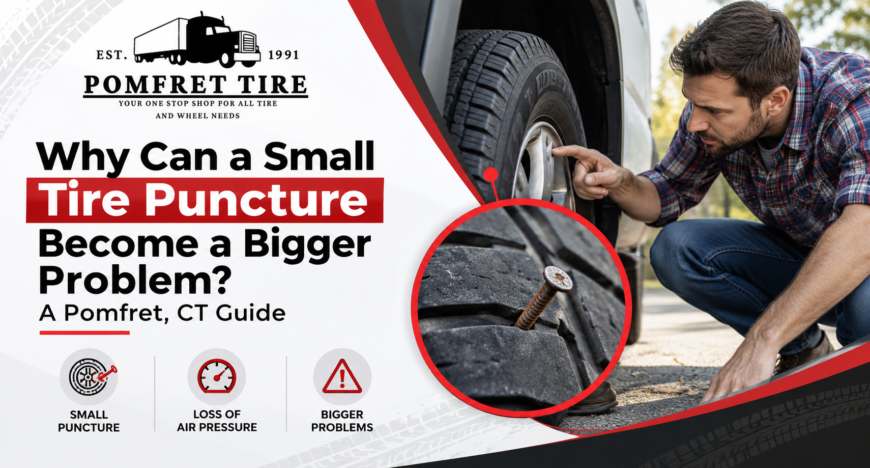

A small puncture in a tire can be easy to dismiss. Maybe the tire is still holding air, the vehicle feels normal, and the hole looks too minor to cause concern. It can be tempting to keep driving and deal with it later.
However, a puncture can become a larger problem if it is not inspected properly. Continued driving with a damaged or underinflated tire can affect handling, cause additional tire damage, and in some cases make a repair impossible.
For drivers and equipment owners in Pomfret, CT, understanding what can happen after a tire puncture can help you decide when the tire needs professional attention.
A Small Puncture May Not Stay Small
A puncture does not always cause an immediate flat tire. A nail, screw, or other object can create a slow leak that gradually reduces tire pressure.
The tire may look acceptable when you first notice the problem, but pressure can continue dropping while you drive. As the tire becomes underinflated, more of the tire’s sidewall and tread can flex.
That additional flexing creates heat and stress inside the tire. Over time, a problem that started as a small puncture can result in more extensive damage.
Driving on a Low Tire Can Cause Additional Damage
One of the biggest concerns is continuing to drive on a tire that has lost significant air pressure.
When a tire is underinflated, its construction can be subjected to stresses it was not designed to handle during normal operation. The sidewalls may flex more than intended, while the tire can generate additional heat.
Even if the original puncture might have been repairable, driving on the tire while it is severely underinflated can potentially damage the internal structure.
This is why checking tire pressure and responding to a warning promptly is important.
Not Every Puncture Can Be Repaired
The location and severity of a puncture matter.
A relatively small puncture in an appropriate part of the tread may sometimes be repairable, depending on the tire, damage, and applicable repair standards. However, damage near or in the sidewall is generally treated differently because of the way that part of the tire flexes.
Multiple punctures, large holes, cuts, exposed cords, or evidence of internal damage can also affect whether a tire can safely be repaired.
Instead of deciding based only on how small the hole looks from the outside, have the tire properly inspected.
Tire Pressure Can Change the Way Your Vehicle Handles
A punctured tire does not only create a tire problem. It can affect how the vehicle behaves on the road.
Low pressure can influence steering response, cornering, braking, and overall stability. The effect may be especially noticeable when the tire loses a significant amount of air.
If your vehicle begins pulling to one side, feels different through the steering wheel, or produces unusual vibration after a puncture, reduce unnecessary driving and have the tire inspected.
Don’t Assume a Tire Repair Kit Solves Everything
Some vehicles and equipment come with temporary repair products or inflation kits. These can be useful in certain situations, but they should not automatically be considered a permanent solution.
A temporary repair method may have limitations based on the location and size of the puncture and the manufacturer’s instructions. Some products are intended only to help you reach a repair facility.
The tire should still be professionally evaluated when appropriate.
What If the Tire Keeps Losing Air?
A tire that repeatedly loses pressure needs attention even if the original puncture appears to have been repaired.
There may be another puncture, a damaged valve, a problem with the wheel, or an issue with the previous repair. Slow leaks can sometimes be difficult to notice without a proper inspection.
Make checking tire pressure part of your regular vehicle maintenance routine. If one tire consistently loses air faster than the others, do not simply keep adding air without finding out why.
Tire Pressure Monitoring Systems Can Help
Modern vehicles may have a Tire Pressure Monitoring System, or TPMS, that alerts the driver when tire pressure falls below a specified level.
A warning light can be an early indication that a tire needs attention. However, the system does not replace a physical inspection. It may tell you that pressure is low, but it cannot necessarily tell you what caused the pressure loss or whether the tire has internal damage.
Drivers looking for TPMS repair near me in Woodstock, CT can also have questions about how their vehicle’s tire-pressure monitoring system works and what a warning may indicate.
Equipment Tires Can Face Similar Problems
Punctures are not limited to passenger vehicles.
Tractors, lawn equipment, trailers, and agricultural machinery can also experience tire damage. Equipment that operates around fields, construction areas, gravel, or other rough surfaces may encounter objects that can puncture or cut tires.
For farm owners who need Agricultural tire service for farms in Dayville, CT, regular inspection can be particularly important because tire problems can interrupt work and affect how heavy equipment operates.
When Should You Stop Driving?
If a tire is rapidly losing air, visibly damaged, severely underinflated, or showing signs of structural damage, continuing to drive can make the situation worse.
If you notice a puncture while driving, find a safe place to stop and inspect the situation if it is safe to do so. Avoid handling a damaged tire in an unsafe location, and follow the vehicle manufacturer’s recommendations for roadside tire problems.
When you are unsure whether the tire is safe to drive on, professional inspection is the safer approach.
Prevention Starts With Regular Checks
You cannot prevent every puncture, but regular tire checks can help identify problems earlier.
Look for nails, screws, cuts, cracks, uneven tread wear, and changes in tire pressure. Check pressure using a reliable gauge and follow the vehicle or equipment manufacturer’s recommended pressure.
Do not wait for a completely flat tire before taking action.
Final Thoughts
A small tire puncture can become a bigger problem when air continues to escape and the tire is driven while underinflated. Additional flexing, heat, handling changes, and possible internal damage can turn a potentially manageable repair into a more serious tire issue.
For Pomfret, CT drivers, the best approach is to take even a slow leak seriously. Check the tire, monitor pressure, and have the damage inspected rather than assuming the puncture is harmless.
Pomfret Tire provides tire services for vehicles and equipment, helping customers address tire-related concerns before a small problem interferes with everyday driving or work.


